

Some of the biggest challenges we face follow us through generations. And when Jackie Goldschneider sat down to write her memoir, she found two of her activist causes dated back multiple generations in her family.
AboutJackie, a writer, lawyer and cast member on Real Housewives of New Jersey, dealt all her life with anorexia that nearly killed her. She traced this unhealthy relationship to food back to her ancestors who survived the holocaust, and she is only now, decades later, unraveling that trauma.
Jackie now raises awareness for eating disorder recovery and combats antisemitism using her public platform as a reality television star, author, and podcaster to share her personal story and advocacy.
Jay Ruderman:
Welcome to ALL ABOUT CHANGE. Hey, ALL ABOUT CHANGE listeners. It’s Jay here, and I wanted to tell you my book, Find Your Fight, is now available in 800 Walmart stores. In the book, I talk about my biggest successes and those of others, and also failures as an activist, and my personal philosophy on how to make a difference. It’s the perfect gift for friends and family who care about making a positive change in our society.
Some of the biggest challenges we face follow us through generations. And when Jackie Goldschneider sat down to write her memoir, she found two of her activist causes dated back multiple generations in her family. Jackie, a writer, lawyer, and cast member on Real Housewives of New Jersey, dealt all her life with anorexia that nearly killed her.
She traced this unhealthy relationship to food back to her ancestors, who survived the Holocaust, and she’s only now, decades later, unraveling that trauma. Jackie now raises awareness for eating disorder recovery and combats antisemitism using her public platform as a reality television star, author, and podcaster to share her personal story and advocacy. And I’m so glad to have her here on ALL ABOUT CHANGE. Jackie Goldschneider, thank you so much for being my guest on ALL ABOUT CHANGE.
Jackie Goldschneider:
Thank you for having me.
Jay Ruderman:
So I want to start with your advocacy on antisemitism and over the past two years, which have been a difficult two years, and where it continues to be a difficult time for the Jewish people with the rise of antisemitism.
And you really leaned into your Jewish identity, especially during the hostage crisis. And now thank God the hostages, except for one who at this point in time has not been returned, but most of them are home. Do you plan on continuing after this crisis to lean into your Jewish identity and advocate on behalf of antisemitism and other issues facing the community?
Jackie Goldschneider:
Yeah, I mean, in fact, I feel like now that the hostages are back, with the exception of one, that I can really concentrate on antisemitism, and I have no intention of stopping. I feel like I have a really loud, powerful platform in this space, and I can use that to try my best.
I mean, listen, I have four kids who are all teenagers who are going off to college and just every time I think about do I want to take part in this event or that event, I think about the fact that when I’m looking at schools for them, I have to see which ones are protecting them against people informing human swastikas on the football field, right. So the fact that we live in that world right now and that I have a platform to try to affect change, how could I not?
Jay Ruderman:
So I was not surprised to see the intersection in your book between your Jewish identity and eating disorder, and you write about a kid when you were young, calling you Zaftik, which is a Yiddish term for meaning large or fat, that it had a largely negative impact on you and your relationship with your body.
And for people who are not familiar with the way Jews interact with food, we all… all of us Americans see posts around Thanksgiving and the holidays, and around food, and how triggering those times can be.
But for those of us in the Jewish community, we face this once every seven days with Shabbat, and you have Friday night dinners, and you have a Kiddush or reception after a synagogue, and food during the weekend. So could you talk a little bit about this interplay between your Jewishness and eating disorder and how that’s worked out for you over time?
Jackie Goldschneider:
Yeah. Well, I was very surprised to know that there’s something called generational food trauma, which is passed down disordered eating habits from generation to generation. And I always had assumed that my very Jewish mother, my mother’s from Israel, and she would always plough me with food, like always wanted me to eat everything in sight. And I always felt like, and I have a great relationship with her, but she sort of sabotaged me.
And then while I was running… writing my book, I asked her about it, and she explained to me that these ideas about overeating were so ingrained in her because her parents were Holocaust survivors. They met on a train to Russia, they had no food, they lived in a refugee camp in Siberia. And she was raised with this idea of when you have food, you eat all of it because you don’t know the next time you’re getting it. And she was never able to get rid of that mentality, and that’s how she raised me.
So I learned to let go of a lot of these ideas of her sabotaging me or her trying to make me fat. And I understood that her trauma became my trauma. Her parents’ trauma became my trauma. And I know that other cultures are similar to the Jewish culture when it comes to eating, but I think it’s a distinctly Jewish mother thing to really want to feed your kids to capacity and to not take no for an answer around food.
Like, “Try this, try that, try this, try that,” a lot of my life was very difficult because when I was younger, I said yes to everything because I wanted to make everyone happy, and I thought that’s how you were supposed to eat. And then when I got older, and I developed a really horrific eating disorder, I said no to everything. And that was my way of rebelling, and I wouldn’t eat anything that anybody wanted me to eat. And it drove my mother crazy, but Jewishness has always played a part in my eating disorder.
Jay Ruderman:
Tell us about your story, about how you go from being a loved child whose mother’s taking care of you and feeding you to developing an eating disorder.
Jackie Goldschneider:
I never really felt that special as a kid. And my parents made me feel special. They were very loving, but I sort of felt pretty ordinary throughout my life, and I was always looking for something to make me feel prettier and special. And I felt like I’ve always lived in a bigger body, and I just couldn’t seem to lose weight. And I was on every diet, and when I was… and I didn’t have many boyfriends. I’d never felt like I looked good.
And then in my… when I was about 26 years old, I decided to try to cut as much as possible out of my diet, just one of the many diets I would go on, and it stuck, and it spiraled so quickly. But what happened during that spiral was that I got more positive reinforcement than you can imagine. I mean, every… with every pound that I lost, people were just lavishing me with attention.
I was going on dates. I had people asking me how I was doing it, and I got very scared to stop. And before I knew it, I was terrified of food, and I was terrified of not exercising. And in order to keep it going, I created this whole system of rules that I had to stick by. And eventually, there were more and more rules. And then I met my husband.
I met my husband about six months into my anorexia, and he was the most beautiful man who ever wanted to date me. And I was terrified of losing him, which obviously I wouldn’t have, but I was terrified of gaining weight. I felt like it would be a bait and switch to finally date him and then to start gaining weight back. So I convinced myself that I would stick it out for just a little longer, and a little longer turned into 18 years.
Jay Ruderman:
So did your husband know at this point? I mean, did he know what was going on, and did you talk to him about it?
Jackie Goldschneider:
He knew what was happening. I don’t think that he really understood eating disorders. His mom and his sister have a very normal relationship with food, and no one in his family is terribly thin and I think he’s never had exposure to it. So he knew something very unhealthy was going on, but he really had no idea how to stop it. The very few times that he tried to intervene, I bit his head off. So I mean, eventually you’re going to stop, right. I mean, you want to protect your marriage, and you have to…
At some point, when your wife is telling you, “I’m just not a hungry person, I’m fine.” And all around you are different diets. There’s people doing paleo and keto, and at what point do you say that what I’m doing is less healthy than what they’re doing? So I think he got confused, overwhelmed. I don’t think he knew how to help me. And you get yelled at enough times, you give up. So he always knew, and it always bothered him, but there wasn’t really much he could do.
Jay Ruderman:
But we all… those of us who deal with addiction, sometimes people have to hit rock bottom until they’re like, “Oh my God, this is… I can’t. I’m going to die if I don’t take care of myself.” What was that point like for you?
Jackie Goldschneider:
I think I hit about three rock bottoms throughout the course of this, and two of them scared the hell out of me, but didn’t make me change. Those were terrifying. And one of them was after that trip, I came home and got on my scale, and the number was so low, I said, “I think I’m going to die. I know I’m going to die if I don’t stop.” And the second rock bottom was a doctor’s appointment where the doctor didn’t even flag anything, but my heart rate was so low that I remember thinking, “This can’t be normal, and this can’t be good for me.”
But the third rock bottom I had, it wasn’t the worst rock bottom. It was a body pain that I insisted on running through because I had a rule among my hundreds of rules that kept me going with my eating disorder. One of them had to do with calories in, calories out. So if I didn’t exercise that day, I really couldn’t eat that day. So I was running through an injury, and I was just in so much pain, and I found myself on the floor. But the thing is, I was already 45 years old, and I have a little bit different perspective on life.
I could see the 18th hole. I know that life is not forever. I’ve known people who died young, and I didn’t want that for myself. I had four young children, and I sort of, in that moment, said, “Am I still going to be doing this when I’m 65?” And then I realized I might not even make it to 65 if I keep doing this. So that was the moment, the first time where I really said, “You know what? I got to stop.”
Jay Ruderman:
How do you make that change? Because so many people can’t make that change. They get to the point where they’re sick, or they die, or whatever. And I do believe about addiction, no matter how many people tell you or can have that discussion with you, like, “Hey, you got to make a change. Something’s wrong.”
It’s not until you decide that, “I’m going to make that change,” that it happens. So how did that happen to you? And I know there’s going to be people listening to this who are going through the same thing, and they’re going to want to know the answer to this question.
Jackie Goldschneider:
Okay, so the first thing I would say is do not try to do it alone. Open up to a loved one because once you open that door, you can’t close it. Went upstairs, asked my husband if I could speak to him, and for the first time ever, I said, “I’m really sick.” And I tear up thinking you matter, because it was such a pivotal moment in my life and a conversation that he had been waiting for so long, and I said, “I’m really sick. I need to get help. I need to stop.” And he was so happy. And he said, we’ll do it together, and whatever help you need.
And then I actually called the producers of my show, and I said, “I know what I want to do next season on the show, and I need your help. I need you to help me find a treatment center.” And together we found a treatment center, and I would tell anybody who wants to make a change but is scared and doesn’t know how, the first thing you should do is ask people you love to just be in your corner and to help you, not to push you and not to overwhelm you, but to be there to help you because the support system goes a really long way. And then really try to move fast before you change your mind.
There’s lots of resources out there. I work with the National Eating Disorder Association, and they’re nationaleatingdisorders.org, and I think that’s the correct website, but if you put in NEDA into Google, you’ll find it. And they have tons of resources for people you can call, places you can go. And Renfrew set me up with a… Renfrew Center was where I went, and they set me up with a specialized eating disorder therapist, and she set me up with a specialized dietitian. And together the three of us were a team. And I still speak to them weekly to this day, four years later.
Jay Ruderman:
First of all, I’m so happy that you had that support network in your family. Not everyone has that. And you were lucky to have that, and it helped you take the step. How important is therapy to move through this?
Jackie Goldschneider:
It’s so important. I mean, I think actually a dietician is also very important because I started with just the therapist, and she was amazing. The reason why therapy is so crucial to this is because anorexia is a mental illness. It’s not about food. I mean, in part, of course, it’s a little bit about food, but this fear of eating comes from somewhere. You’re trying to fix something, and if you don’t figure out what you are trying to fix by starving yourself, you’re never going to get over it, right.
You’re just going to revert to that because it worked for you. So once she helped me start eating, she gave the job of actually eating food to a dietician to help me figure out what my body needed, how to start feeding myself in ways that didn’t feel too scary, and my therapist and I really got to work trying to figure out what this eating disorder was doing for me, why I was hanging onto it, why I needed it. And once we started to really unravel that, I really didn’t need it anymore.
Jay Ruderman:
So you’re on a television show where your fellow castmates are also thin, and how do you deal with that? I mean, how do you deal with changing your view of your body and also being on a show that highlights people who are fit?
Jackie Goldschneider:
Yeah. Not easy, especially because my recovery started in 2021 and all of the diet drugs started… I mean, they’ve been around, but really started going into mainstream culture in 2022, I think. So the overlap of me gaining weight and everyone else losing weight was really hard for me. My castmates were not always super thin, and now everyone is. And at first, that really threw me. It really did.
It made me feel like, “Well, wait a second. I don’t want to be the only one, and I don’t want to gain weight while everyone’s losing weight, and I don’t want them getting all the praise while I get all the people looking at me with pity.” But I had to make a rule for myself that nothing was getting in the way of this and that there was going to be curveballs along the way, and I would really just have to… I would have to deal with them. And it hasn’t been so bad. I mean, my dad is open about it. He’s on Ozempic, and he’s got diabetes, and he’s also 82 years old, so it’s different.
But I’ll go to dinner with my dad, and he’ll order an empty plate and say, “I’m not hungry. I’ll just take a little bit of what the kids are getting.” And for me, that’s really difficult to watch someone give themselves permission to not eat. And I have these little moments where I’m like, “I don’t want to eat either.” And then I talk myself out of it. I mean, it’s a constant. It’s not easy all the time, but it’s worth it.
Jay Ruderman:
And what’s your body image right now? I know you’ve talked about you don’t weigh yourself any longer.
Jackie Goldschneider:
Right. And I think that that is so important to anybody listening. If you are on a recovery journey, I advise you to not put numbers on it.
Jay Ruderman:
So, how do you look at yourself?
Jackie Goldschneider:
I have good days and bad days, but I have a few things, a few tricks. First of all, I don’t weigh myself, so that’s the first thing, because you can’t hate a number that you don’t know. And number two is if I find myself criticizing my body in the mirror, I walk away from the mirror. I don’t let myself get lost in that moment. I feel good because most of my friends in real life, not show people, but my real close friends, and none of them are really on diet drugs. We’re all normal-looking 50-year-old women. So my body fits in perfectly among them, but I also still exercise.
I know that I’m fit and I know that I’m healthy, so I have to love my body because it’s a fit, healthy body. And I know a lot of 50-year-old women whose bodies are not super healthy. And when I say healthy, I don’t mean exercise healthy. I mean, I’m lucky enough to have good health, and so I can’t take that for granted. So I feel good. I feel like I look good and I’m happy. And I’m sure that if I was weighing myself, I would be giving myself anxiety every day over what the numbers were. So ignorance is bliss, and I feel okay. As long as my pants button, I’m not worrying about it.
Jay Ruderman:
It’s nice that the producers who you contacted supported you.
Jackie Goldschneider:
Yes, it was really important for me. I did find, and I know like you said, not everybody has a husband that they can run to, and who’s going to say, “Okay, I got you. We’ll do this together.”
But finding people to be a support system, including the producers who were, yeah, they were making a show, and this was a good show, but they also… I had known them for many years, and they were very interested in helping me, but I think that anybody could be that support system for you. For me, I had stopped and started a lot of times.
I was one of those people who said, “Monday morning I’m going to start eating more,” and then come Monday morning, I would not know where to begin. So having all of the audience of the show hold me accountable was really helpful to me.
Jay Ruderman:
What message do you have to younger people, or maybe not young people, who are listening to the show, who are… they’re listening to you, and they’re like, “Yes, I’m going through an eating disorder, or there’s something wrong about the way I’m eating.” What’s your message to them about what they should do early on?
Jackie Goldschneider:
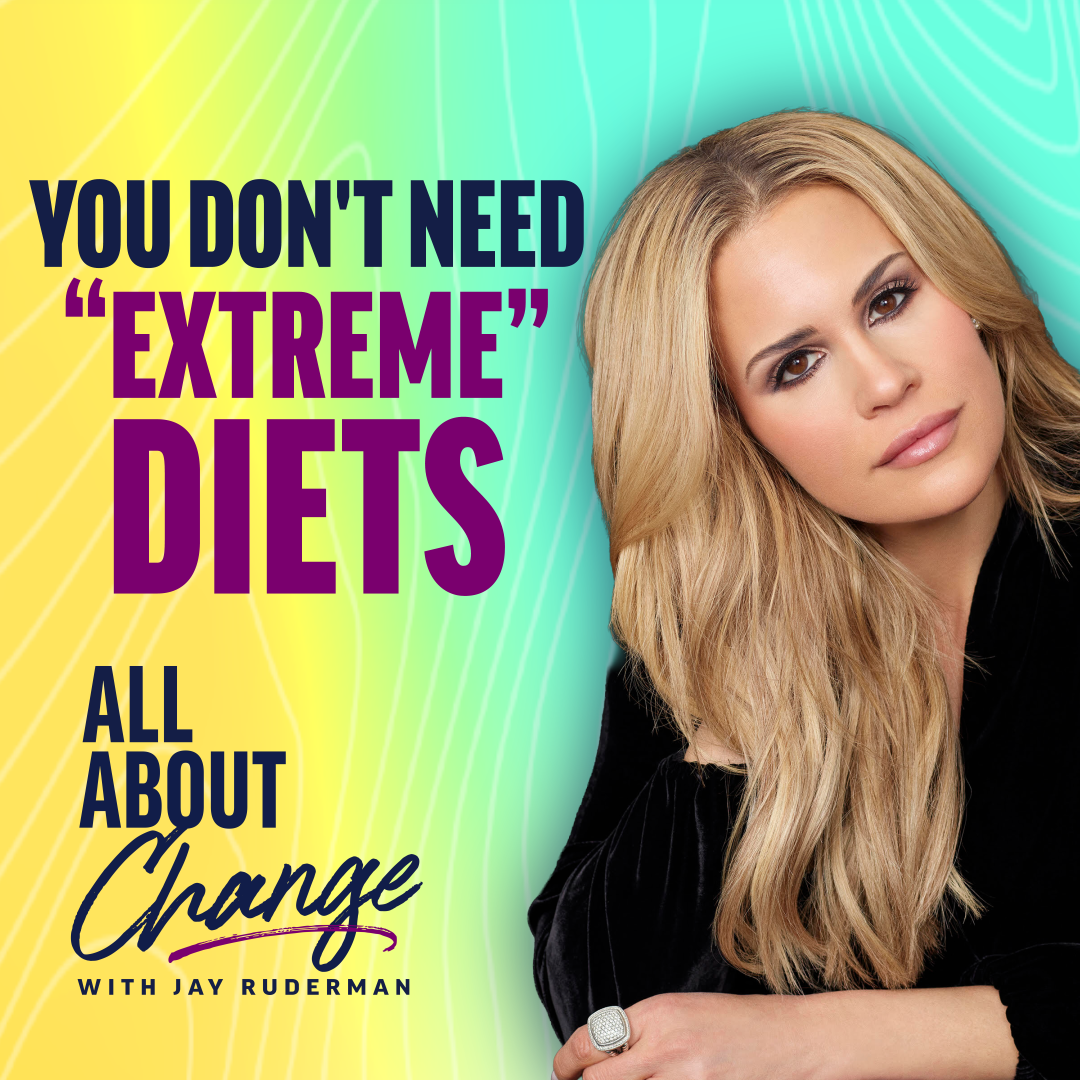
First, I would let them know that social media and the diet companies who are very invested in you being on diets, they feed you a lot of lies. Your body is very efficient. It can handle food. You don’t need to go on extreme diets. You don’t need to do the fad diets. I think I’ve learned, and one of the reasons why I don’t go on diet drugs for many reasons, but the main reason is because I want, for the first time in my life, I want to have a healthy relationship with food, which means I want to be able to recognize my hunger to eat what I’m in the mood for when I’m hungry, and to stop when I’m not hungry anymore or when I’m full.
And I think I would tell people that if they really lean into that and they learn the right way to feed their bodies, that they don’t need to do anything extreme. I would also tell them that it’s normal to fluctuate, which is not something that I ever allowed myself to do. I had to stay within one pound always. But it’s normal to fluctuate. It’s normal to go up and down, and you deserve to eat. And also, really, to keep in mind that if you don’t feed your body properly, your health will suffer. Your health will suffer. And my health certainly suffered.
Jay Ruderman:
And how do you talk to your kids about eating?
Jackie Goldschneider:
That’s really hard because they’re all teenagers and they all have hang-ups about food. I completely own the fact that by the time I stopped, they were old enough to have seen a lot of terrible habits around food. And so I did talk to them about what I’ve done and how I’ve changed. And I try to model good behavior about eating anytime I am with them. But I get caught up sometimes. I don’t know how to answer. I have… My three boys are athletes, and they have… they certainly eat me out of house and home, so I’m not so worried about them.
Sometimes they go on healthy kicks, but they never do anything. I’m always watching, and it’s never anything alarming. When my daughter asks me, “Is this healthy? Can I eat this? Should I stop?” I get very nervous. I don’t want to say the right… the wrong thing. And sometimes if she’ll skip a meal, I’ll say, “You have to eat. You have to eat.” Because I get so scared that she’s modeling me and she’ll say, “Mom, I had the biggest lunch. I’m not doing anything bad. I’m just really not hungry,” and I have to trust her. And that’s hard for me because I know the things that I used to do.
So I think I’m always extra vigilant, but talking to my kids about healthy versus non-healthy and what’s good and what’s bad, I try to take a very middle-of-the-line approach. I try to not label foods as all… at all. I tell them that they can have anything they want in moderation, and to really just get… I try to use dietitian verbiage of, “Get in a good mix of protein and fiber, and then stop when you’re not hungry anymore.” And I leave it there. “Get some physical exercise too.”
Jay Ruderman:
Jackie, I want to end by talking about your TV show, and fans look at it, and it’s popular and they see the sass and the drama and the fights. But when you step out as an activist, whether it’s about eating disorders or whether it’s about Jewish representation and safety, what is the reception that… among your fellow cast members to your activism?
Jackie Goldschneider:
Everybody on my cast has their own charities and philanthropies that they work with and their own causes that they work with. And so I think everybody just kind of stays in their lane. But there’s only one other Jewish person on my cast, and for many years, I was the only Jewish person on my cast. So I don’t think it’s something that they really feel like they relate to at all.
I did co-chair a Holocaust events last year, and one of my cast mates came to it, which I thought… And she’s not Jewish. It was Teresa, and she’s not Jewish. And it brought a lot of visibility to the charity and I thought it was so incredible to be an ally like that, and it really meant a lot to me. But in general, it’s not something that I ever hear about from my cast mates, but I mean, I don’t talk to half of them anyway, as is the nature of the Housewives.
Jay Ruderman:
And your producers, they’re okay with you talking and talking about causes that are important to you?
Jackie Goldschneider:
Yeah, I mean, my show is not currently filming. We’ve been on hiatus for two years, so technically, they can’t say anything. But Bravo, no, Bravo is super supportive of anything and everything that I’ve been doing for the Jewish community.
Jay Ruderman:
I want to wish you all the success in the world, and I wish that you’ll go from strength to strength.
Jackie Goldschneider:
Thank you so much. This was really great.
Jay Ruderman:
Thank you. It’s been a pleasure. Thank you for being part of the ALL ABOUT CHANGE community. We aim to spark ideas for personal activism, helping you find your pathway to action beyond awareness. So thank you for investing your time with us, learning and thinking about how just one person can make the choice to build a community and improve our world. I believe in the empower of inform people like you to drive real change, and I know that what we explore today will be a tool for you in that effort.
All right, I’ll see you in two weeks for our next conversation, but just one small ask. Please hit subscribe and leave us a comment below. It lets us know that you value this content, and it supports our mission to widely share these perspectives. If you’re looking for more inspiration, check out this next video. I chose it for you, and I know you’re going to enjoy it. I’m Jay Ruderman. Let’s continue working towards meaningful change together.
Today’s episode was produced by Tani Levitt and Mijon Zulu. To check out more episodes or to learn more about the show, you can visit our website Allaboutchangepodcast.com. If you like our show, spread the word, tell a friend or family member, or leave us a review on your favorite podcasting app. We really appreciate it. All About Change is produced by the Ruderman Family Foundation.